Run Without Pain or Limitation Again
Running physical therapy in Elm Grove for athletes dealing with chronic pain, training setbacks, and biomechanical dysfunction.
When heel pain limits your morning runs through Elm Grove or IT band tightness disrupts your marathon training, you need more than rest and ice. Running injuries develop gradually from accumulated stress, poor mechanics, or underlying weaknesses that standard treatment overlooks. At Ares Physical Therapy, you receive video gait analysis, advanced manual therapy, and progressive rehabilitation that identifies why your injury occurred and corrects the movement dysfunction causing it. We treat runners training for their first 5K and experienced marathoners in Elm Grove with the same level of clinical focus and attention.
Your care addresses plantar fasciitis, Achilles tendonitis, IT band syndrome, patellar tendonitis, shin splints, hip flexor strains, hamstring tendinopathy, lower back pain, stress fractures, and chronic ankle instability. Each session includes manual therapy to restore mobility in your feet, ankles, hips, and spine, along with strengthening exercises for hip stability, glute activation, and core control. We also provide running form coaching, load management guidance, and structured return-to-running protocols that allow you to rebuild mileage without re-injury.
If you need assessment or treatment for a running injury in Elm Grove, contact Ares Physical Therapy to schedule an evaluation with our board-certified Doctor of Physical Therapy.
Gait Analysis and Load Management for Injury Recovery
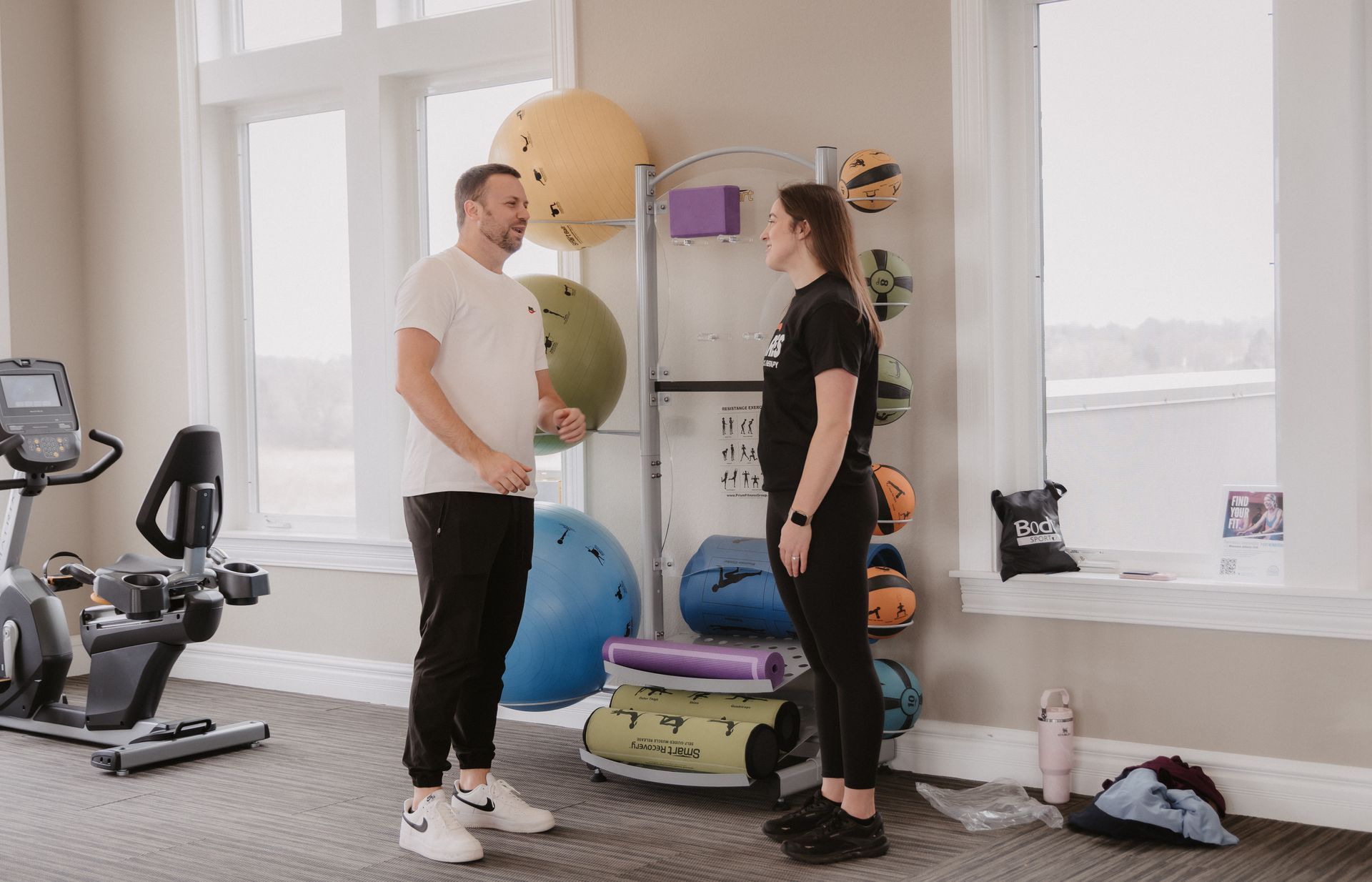
Your treatment in Elm Grove begins with video gait analysis that captures how your foot strikes the ground, how your hips and knees align during stance phase, and how your body absorbs impact with each stride. We identify mechanical inefficiencies contributing to your injury, then use manual therapy and targeted strengthening to correct them. Sessions may include dry needling and cupping to release chronic muscle tension that limits movement quality.
After completing your program, you notice reduced discomfort during runs, improved endurance without compensatory pain, and greater confidence in your stride. Your gait becomes more efficient, and the movement patterns that caused your injury no longer dominate how you run. You return to training with a clear understanding of how to progress mileage safely.
We provide cross-training strategies and modified running protocols that maintain your cardiovascular fitness while allowing injured tissues to heal. Footwear and orthotic consultation may be included when appropriate, though we focus primarily on improving your body's function rather than relying on external devices. This care does not include general fitness coaching unrelated to injury recovery.
Most runners have similar concerns before starting
Runners often want to know how long they need to stop running, what causes injuries to persist, and how to avoid losing fitness during rehabilitation. The following answers address the practical questions athletes face before booking their first session.
Running injuries respond well to treatment that addresses the root cause rather than masking symptoms. Ares Physical Therapy provides the expert care runners need to return to training pain-free and build resilience against future injury. Learn more about how we can help you get back on the road, trail, or track in Elm Grove.